
Agreenculture, a French start-up, says it can turn autonomy from a moonshot into an upgrade. The bigger question is whether “plug-and-play” can overcome farming’s hardest constraints: safety, service, and trust.
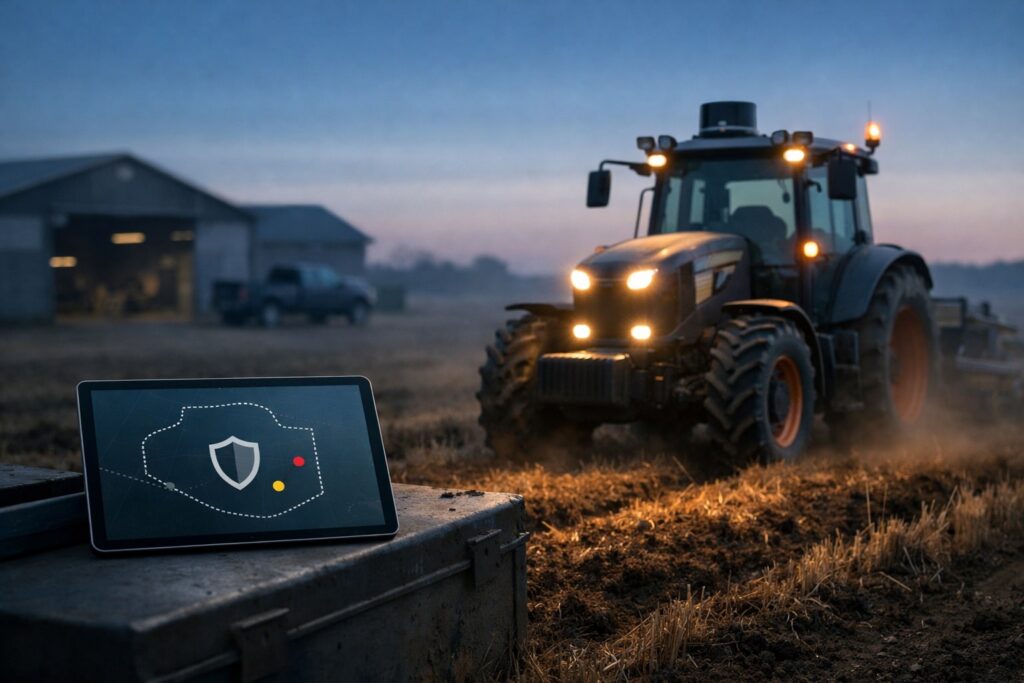
At 2:17am, a tractor is doing what tractors have always done: pulling steel through soil, keeping a straight line, turning at the edge of a field, starting the next pass.
What’s different is the empty cab.
This is the vision that has hovered over farming for years: machines that work longer hours, in tighter windows, with fewer hands. Until recently, autonomy in agriculture has looked like a choice between two extremes: buy a purpose-built robot that does one job well, or wait for the big equipment makers to ship fully autonomous tractors at scale.
A third path is now getting louder: retrofit autonomy — autonomy as a kit, not as a new machine.
On December 16, 2025, Agreenculture, based in Toulouse, said it raised €6 million in a Series A round from Supernova Invest, Future Food Fund, and Unilis (Unigrains Group), alongside a credit facility from Crédit Agricole Toulouse 31. The company’s pitch is simple: take a “normal” tractor platform (or an implement carrier), add a certified autonomy layer, and make it safe enough — and supportable enough — to run without someone sitting on the seat.
If that sounds like Silicon Valley talking, the forces pushing farmers toward it are not theoretical. They are demographic. They are economic. And they are getting sharper.
A shrinking workforce, and a long-lived fleet
Across the EU, the labour pool inside agriculture has been shrinking for years. Eurostat estimates that EU agricultural labour input was about 7.5 million full-time equivalents in 2024, and that the long-term trend has been down — a loss equivalent to 3.6 million full-time workers between 2009 and 2024, or an annual average decline of 2.6%.
At the same time, fewer young people are taking the helm. In 2020, only 11.9% of EU farm managers were under 40, according to Eurostat. The EU’s own agriculture policy pages round this to roughly 12% of farm holdings managed by under-40s.
The US is not immune to the same ageing trend. Using Census of Agriculture data, researchers at the University of Illinois note the average age of US farmers was 58.1 in the 2022 Census.
You can read those numbers as a warning about succession. You can also read them as an operational constraint: fewer skilled operators available at peak times, and less appetite for the kind of 14-hour stretches that modern farm windows often demand.
Now look at the machinery side. Europe is still buying tractors, but not in volumes that suggest a rapid fleet refresh. Industry group CEMA said 204,500 tractors were registered across Europe in 2024, of which it considers 144,400 to be agricultural tractors — and called the year a 10-year low for registrations.
That matters because autonomy spreads faster when the base hardware turns over quickly. In farming, it often doesn’t. Farmers keep machines for a long time. Dealers support mixed fleets. Implements outlive tractors. And the economics of “buy new to get autonomy” can feel like an expensive way to solve a labour problem that already hurts margins.
This is the opening retrofit autonomy tries to exploit: autonomy as an add-on that rides on the installed base.
A kit that wants to be boring
Agreenculture’s product is not a new tractor. It is an autonomy stack designed to sit on top of one.
The company calls it the AGC Autonomy Kit — a roof-mounted module plus software and sensors that handle guidance, safety, and perception. It says the kit is manufactured in Europe and fully compliant with the EU Machinery Directive (2006/42/EC), and it pairs S-RTK positioning with sensors such as LiDAR, radar, bumpers, and cameras for obstacle detection and monitoring.
The key term in its marketing is Safencing — a certified geofencing layer that, in theory, keeps the machine inside a defined work zone. On its OEM-focused pages, Agreenculture says Safencing is certified under the Machinery Directive (2006/42/CE) with a safety level of PLd under ISO 13849.
Why emphasise this? Because autonomy in agriculture does not fail first on algorithms. It fails first on safety, liability, and what insurers might call “foreseeable misuse”.
A tractor is not a warehouse robot. It’s heavy, powerful, and often used in dynamic environments: uneven terrain, changing traction, dust, mud, people walking through a yard, animals, and public roads nearby. The “last 1%” of weird edge cases matters more than the first 99% of clean, repeatable field passes.
Agreenculture’s argument is that if you can make the safety case repeatable — not bespoke per prototype — autonomy becomes a product that OEMs and dealers can actually sell, service, and stand behind.
The real customer is the OEM (and the dealer)
There is another telling detail: Agreenculture does not want to sell directly to farmers.
In an interview with AgTechNavigator, CEO Christophe Aubé said the company routes its technology through established manufacturers and dealer networks to build confidence that the machines will remain serviceable over time — and that profitability must be proven “for each use case.”
That distribution decision is not just commercial. It is cultural.
In many regions, the dealer is the farm’s technical backbone: troubleshooting, parts, firmware updates, seasonal prep, and the human reassurance that a machine will not become a stranded asset in two years. Autonomy that bypasses that ecosystem may win a demo day and lose the farmyard.
This is also why retrofit autonomy is increasingly marketed as a way for OEMs to accelerate. If autonomy is a bolt-on that can be integrated, validated, and certified faster than building a full in-house stack, it shortens the time from R&D to a product a dealer can sell.
Agreenculture says it already has 50+ machines equipped and deployments in 10 countries.
It is also explicit about its near-term scaling ambition. In the same interview, Aubé said the company expects to deliver 200 autonomous machine kits over the next 18–24 months, with Europe first, then the US and Japan.
For a company selling into industrial supply chains, these are meaningful numbers — not because they are huge, but because they suggest the goal is serial production rather than perpetual pilot.
The payback story is the product
The most important part of this category, however, is not autonomy. It is payback.
Agreenculture is unusually blunt about this. It argues that in “typical” open-field scenarios, payback can be as fast as one year, with ROI “often exceeding 300%,” driven mainly by labour savings.
On its own site, it puts a number on the problem: €19,500 per year in cost savings in open field conditions, on a 160-hectare farm (presented as a representative scenario).
You should treat those as company estimates, not as audited farm accounts. But the structure is revealing: the pitch is not “the future is cool.” The pitch is “this pays back like a practical tool.”
That framing is a quiet admission about where ag autonomy has struggled: a gap between what can be demonstrated and what farmers will finance.
Farmers are not anti-technology. Many already use precision guidance, variable-rate application, and telemetry. But they are skeptical of systems that add a new failure mode during peak operations.
Autonomy has to win on two fronts at once:
- It must lower cost or raise capacity in a measurable way, not merely shift labour from the seat to the office; and
- It must be reliable enough that it doesn’t introduce a new kind of risk (the machine that stops at 3am and needs a reset).
“Run longer hours” sounds like a slogan until you remember what a planting delay can do to yields and farm schedules. If autonomy adds even a few more workable hours per day during a short window, the value can be disproportionate — not because the tractor is faster, but because time becomes less scarce.
Safety has a standard now — and that changes the market
One reason retrofit autonomy is suddenly more credible is that safety is being standardised.
The ISO 18497 series covers safety for agricultural machinery and tractors with automated and autonomous functions, focusing on significant hazards and design principles for safe operation. This matters less for marketing than for procurement: standards give OEMs, insurers, and regulators a common language for what “safe enough” means.
Agreenculture’s own messaging leans into that compliance layer — and so do some OEMs.
Consider Kubota’s M7004 Autonomous concept, presented around Agritechnica 2025. Kubota describes a workflow that includes mapping field boundaries and obstacles, uploading a mission, and operating “autonomously under remote supervision.” It claims that in most conditions, about 80% of fieldwork can be carried out autonomously, with headlands and complex areas handled manually for safety.
Kubota also frames autonomy as a way to change the machinery mix — potentially shifting from 250–300 hp tractors to 150–175 hp setups for many tasks, reducing compaction and mechanisation costs per hectare.
This is a subtle but important point. Autonomy is often sold as “the same system, but without the driver.” In practice, autonomy may change the entire operating model: smaller machines, more passes, better timing, more precise input application. That is where the environmental story begins to align with the economics.
Agreenculture makes a similar argument: autonomy can reduce compaction by enabling smaller platforms and can make cover cropping and precision application more practical.
The competitive set is getting crowded — and that’s a good sign
Agreenculture is not alone in the retrofit approach. That is precisely the point: when many actors converge on the same idea, it usually means the market is moving from “possible” to “purchaseable”.
In the US, John Deere has been pushing autonomy both as new machines and as upgrades. At CES 2025, Deere said its second-generation autonomy kit can be available pre-installed and also offered as retrofit kits for certain existing machines. Deere’s framing is similar: customers don’t have to replace everything to get autonomy; they can “ready” existing equipment.
Then there are the specialist autonomy providers.
- Bluewhite, an Israeli-American company, raised $39 million in 2024 for a robots-as-a-service model that can be retrofitted to drive tractors.
- Sabanto sells an autonomy kit that, according to Agriculture.com, costs about $70,000 and is compatible with a range of tractor series across major brands.
- Carbon Robotics introduced Carbon AutoTractor, an autonomy kit designed to retrofit tractor platforms, tying autonomy to its LaserWeeder implement ecosystem.
- Raven markets OMNiDRIVE as an autonomous solution that fits on existing machines for specific driverless field operations.
The pattern here is telling: autonomy is being “componentised”. It is starting to resemble a Tier-1 supplier market — like automotive systems — where OEMs and retrofit providers can either build in-house, partner, or buy.
That shift can accelerate adoption, but it also raises a harder question: who owns the operating system of the farm machine?
The hidden fight: serviceability, updates, and trust
Autonomy is software-heavy. That means updates. That means diagnostics. That means sensors that drift and fail. In a car, the dealer network is dense and the service cadence is predictable. On farms, machines are farther apart, workloads are seasonal, and downtime costs cluster at the worst possible times.
Agreenculture has tried to confront this directly by positioning itself as an enabling layer for OEMs and by emphasising dealer support services. The idea is not just to sell a kit, but to ensure the OEM can keep it running in “serial life” — the long, unglamorous years after the demos.
This is where retrofit autonomy either becomes mainstream or stalls again.
A farmer will accept a new system if they believe three things:
- The machine will behave predictably and safely, including when something goes wrong.
- Someone local can fix it, fast.
- The economics are not fragile — meaning the payback does not depend on perfect conditions.
That last point is why Agreenculture’s insistence on per-use-case profitability is more than salesmanship. It is a recognition that autonomy may work brilliantly in some operations and disappoint in others.
A vineyard crawler that repeats the same rows every week is not the same as a mixed arable farm with irregular fields, shared labour, and changing implements. Autonomy that feels like magic in one setting can feel like hassle in another.
How big could this get?
Forecasting autonomy markets is always risky — partly because definitions vary (semi-autonomous guidance versus full driverless operation), and partly because adoption curves in agriculture are uneven.
Still, analysts are now assigning real numbers to the category. Mordor Intelligence, for example, estimates the autonomous tractor market at about $2.2 billion in 2025, forecasting growth to $5.2 billion by 2030.
Even if those figures prove optimistic, the direction is clear: autonomy is no longer treated as a sideshow. The world’s biggest equipment manufacturers are shipping autonomy-ready platforms, while smaller suppliers and start-ups are trying to make autonomy modular.
And the labour trend is not reversing quickly. Eurostat’s long-run decline in agricultural labour input is not a temporary shortage; it is structural.
If autonomy becomes “buyable” — not just “demoable” — retrofit kits may be the fastest way to spread it, because they respect how farms actually buy and keep machines.
The thought that should worry everyone (and also give hope)
There is a comforting version of this story: machines replace labour, farms carry on, food gets cheaper.
Reality is messier. Autonomy won’t remove labour; it will reshape it.
The tractor driver doesn’t disappear. The job changes. Someone still plans missions, checks fields, handles exceptions, coordinates implements, and makes judgement calls when conditions change. In the Kubota workflow, mapping and mission setup are central, and remote supervision remains part of the operating model.
In other words, autonomy moves labour from muscle to management.
That can be good. It can pull farmers away from the monotony of steering and toward higher-value decisions: agronomy, timing, input optimisation, marketing, and risk management. It can also make farming more accessible for people who can manage systems but cannot — or do not want to — spend long hours in a cab.
But it also creates a new dependency: farms become more software-reliant, and the vendor relationship becomes a bigger part of the production system. Who gets to update? Who gets to repair? Who bears liability? Who gets the data? The answers will shape whether autonomy feels like empowerment or lock-in.
Agreenculture’s bet is that the path through OEMs and dealers can make autonomy feel normal — a capability that comes with support, certification, and continuity.
If that bet is right, the empty cab at 2am won’t feel like science fiction. It will feel like the next logical upgrade in a world where time, not horsepower, is the tightest input.