Investors are warming back up to AgTech — but with a different taste. The money is shifting from “better insights” to machines that can actually do the work.
At first glance, the latest wave of agricultural AI looks familiar: more maps, more alerts, more dashboards promising to “optimize” the farm. The pitch is sleek; the economics are often not.
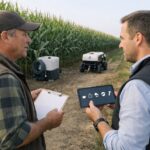
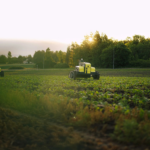
What is changing in 2026 is less visible on a screen. It is happening in the field — in spray booms that can decide, plant by plant, where to apply chemicals; in weeding machines that turn camera feeds into micro-actions; in tractors that do one dull job for hours without complaining. The phrase being used more often is “physical AI”: models that do not just analyse the world, but perceive it and act on it.
This is not a philosophical distinction. It is a bet on where real value sits in agriculture — and why the venture industry, after two bruising years, is quietly reshuffling its AgTech playbook.
The hangover: why AgTech needed a new story
AgTech has spent much of the past decade trying to make farms behave like software businesses: recurring revenue, smooth adoption curves, fast scaling. Farms are not like that. Agriculture is capital-heavy, weather-exposed, politically sensitive — and run on tight margins that punish new complexity.
The funding cycle made this obvious. As interest rates rose and exits stalled, investors pulled back. The easy targets were the companies whose main output was “insight” — valuable, but not always monetisable in a way that beats the cost of selling into agriculture.
Even where data tools delivered better decisions, the payback was often indirect: a slightly better input mix; a modest yield bump; fewer surprises. Meanwhile, the big costs on a farm — labour, fuel, chemicals, time — stayed stubbornly physical.
So, if AgTech was going to earn investor attention again, it needed to attach itself to something farmers already pay for in cash: doing work.
That is the core of the 2026 thesis. AI is no longer just a layer on top of agriculture. It is becoming part of the machine.
Why “physical AI” lands better on a farm than in a boardroom
Agriculture is one of the few industries where a good algorithm can be worthless if it cannot survive dust, vibration, weak connectivity, uneven terrain, and operators who have no time for configuration menus.
This is why the winners in farm technology are rarely the most elegant. They are the ones that fit into a workflow that already exists.
“Physical AI” has a practical appeal here because it offers a simpler promise: the machine does a job you already pay someone to do — but more precisely, more consistently, or at more inconvenient hours.
Consider weed control. Farmers face two pressures at once: weeds that resist chemistry, and public scrutiny of chemical use. A camera-and-model system that can identify weeds in real time, at speed, changes the economics. If the sprayer can treat only what needs treating — or if a machine can remove weeds mechanically or with targeted energy — then the farmer buys fewer inputs, faces fewer compliance risks, and may reduce labour.
The same logic applies to harvesting and handling. Specialty crops depend heavily on seasonal labour and timing. If a robotic system can take even one step out of the process — scouting, thinning, picking assistance, packing-line sorting — it can matter more than a marginal yield model.
In other words: farms do not need AI to be clever. They need it to be useful.
The economics: farms pay for outcomes, not features
The best “physical AI” products are priced around a familiar question: what does this replace?
That is why so many credible use cases cluster around a few categories:
Precision spraying. Field trials and extension research are increasingly pointing to meaningful chemical reductions when “see and spray” systems are used well. In practice, this is less about futuristic autonomy and more about narrow, repeatable savings: fewer gallons sprayed, fewer passes, less drift risk.
Weeding and cultivation. The business case is strongest where weeding is labour-intensive and expensive — organic systems, high-value vegetables, and crops where weeds are costly to control late. Studies and on-farm trials show savings ranging from modest to dramatic depending on crop type, weed pressure, and how well the system fits into the rest of the farm plan.
Dairy and controlled routines. Not every farm problem needs an android. Some tasks are repetitive and measurable: feed pushing, barn routines, equipment runs. If a machine can do the same thing every hour, the upside can show up in labour savings — and sometimes productivity, because livestock responds to consistency.
The point is not that robots will replace farm workers overnight. It is that the first wave of “physical AI” is designed to shave costs where farms already feel pain — and where the savings are easy to count.
This is also why investors are more comfortable backing it. A clear ROI story is a substitute for hype.
The technology stack is getting real — and it is getting cheaper to build
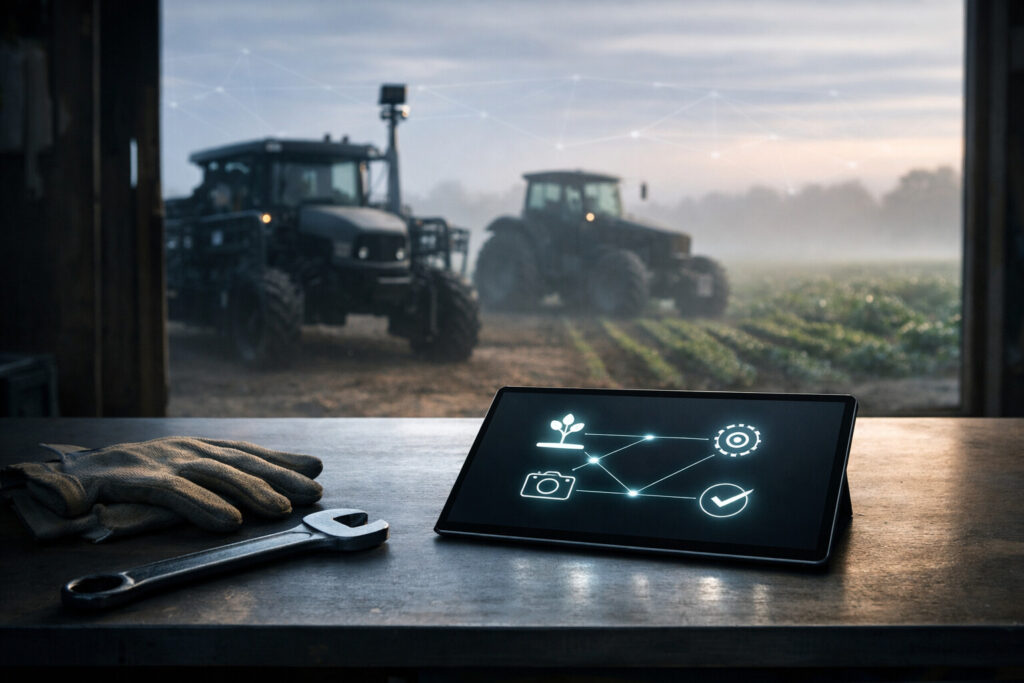
The technological ingredients for physical AI have existed for years: cameras, GPS, controls, cloud software. What has improved is the ability to fuse them into something reliable — and to run smarter models at the edge, where connectivity is weak and decisions must be instant.
A modern farm robot is less like a single product and more like a stack:
- Perception: vision models trained to distinguish crops, weeds, fruit, defects, obstacles.
- Decision-making: software that turns perception into actions — where to spray, how fast to move, when to stop.
- Actuation: motors, valves, lasers, tools — the physical part.
- Uptime and service: the unglamorous layer that determines whether the farm trusts it next season.
- Workflow integration: compatibility with existing tractors, implements, farm management systems and operator habits.
What changed in the past two years is that AI models — especially those built on broader foundations and adapted to farm conditions — have become easier to develop and deploy. At the same time, edge compute has become more capable, allowing machines to run sophisticated inference without needing the cloud for every decision.
This is why you now see farm machines marketed in terms that used to belong to data centres: GPUs, modules, inference speed. Agriculture is becoming another edge-compute environment — with mud.
The investor reshuffle: from “growth” to “proof”
Venture capital is not abandoning AgTech. It is asking it to behave differently.
After the downturn, investors have been practising “flight to quality”: fewer bets, more attention to late-stage companies, and a preference for technologies that can point to near-term adoption. The bar is higher. So is the desire for credible exit paths — through acquisition by large equipment makers, or through companies reaching a scale where public markets stop rolling their eyes.
That has knock-on effects:
- Hardware is back — but only with software moats. Pure hardware is hard to fund. Hardware with proprietary data, model improvement loops, and service-driven recurring revenue is easier to justify.
- Commercialisation matters more than novelty. A robot that works in a demo plot is not a business. Investors now reward “measurable impact” — in acres covered, hours saved, inputs reduced.
- Distribution is part of product-market fit. The winners will often be the companies that can sell through existing channels: equipment dealers, co-ops, agronomy providers, and large growers who influence their peers.
In short: VCs are still taking risk — but they are trying to take the kind that scales.
The harder truth: farming is not a lab, and robots are not apps
For all the excitement, physical AI has a structural problem: farms are harsh environments, and the cost of failure is high.
A broken app is annoying. A broken machine in peak season can be catastrophic.
This is why physical AI companies face challenges that software-only AgTech could sometimes ignore:
- Reliability and maintenance: dust, heat, vibration and long operating hours punish delicate systems.
- Edge cases: farms are full of them — different soil, different varieties, different lighting, different weed profiles.
- Liability and safety: especially for autonomous systems, lasers, and high-power equipment.
- Financing: even when ROI is strong, many farmers prefer not to buy expensive machines outright without flexible options.
- Trust: farmers value tools that are boring and consistent more than tools that are impressive.
The winners in this cycle will likely be those who treat operations, service, and business model as core technology — not as afterthoughts.
What 2026 could look like: less hype, more machines that quietly work
If you want a simple forecast: AgTech’s next boom is unlikely to be led by a new farm “super app”. It will be led by systems that reduce costs in a visible way — a sprayer that uses less chemical, a machine that replaces a tedious job, an autonomous routine that produces a measurable improvement.
In that sense, physical AI is not just an AgTech trend. It is a reset of what counts as innovation in agriculture.
For a decade, farm technology has tried to sell farmers better decisions. In 2026, the more compelling promise is different: fewer decisions, because the machine does the job.
And that, finally, is a story both farmers and investors can understand.